Sunday, 28 February 2016

ONE Members Campaign For Health Reform


Last Saturday, February 20th, some ONE members took to the streets of Lagos, Nigeria to raise awareness on the need for reform in the health sector. The campaign drew a lot of interest from members of the public, some of whom joined the ONE members to urge the government to allocate more resources to the health sector in order to tackle the many issues plaguing the sector.They want a #PeoplesBudget2016.


Millions of women particularly in the rural areas still die during childbirth in Nigeria today. Another sad fact is that Nigerian children under the age of 5 are among the most malnourished children in the world today even though Nigeria’s economy is one of the largest in Africa.

Saturday, 13 February 2016

ZIKA VIRUS DECLARED GLOBAL HEALTH EMERGENCY


The World Health Organization (WHO) has declared the Zika virus and its suspected link to birth defects an international public health emergency and given countries tools to fight it.


WHO Director- General, Margaret Chan called Zika "an extraordinary event" that needed a co-ordinated response.
"I am now declaring that the recent cluster of microcephaly and other neurological abnormalities reported in Latin America following a similar cluster in French Polynesia in 2014 constitutes a public health emergency of international concern." 

She said the priorities were to protect pregnant women and their babies from harm and to control the mosquitoes that are spreading the virus.

Zika virus is an emerging mosquito-borne virus that was first identified in Uganda in 1947 in rhesus monkeys through a monitoring network of sylvatic yellow fever. It was subsequently identified in humans in 1952 in Uganda and the United Republic of Tanzania. Outbreaks of Zika virus disease have been recorded in Africa, the Americas, Asia and the Pacific.
Currently, there is no vaccine or medication to stop Zika. The only way to avoid catching it is to avoid getting bitten by the Aedes mosquitoes that transmit the infection.
The WHO has already warned that Zika is likely to "spread explosively" across nearly all of the Americas. More than 20 countries, including Brazil, are reporting cases.

Key facts
  • Zika virus disease is caused by a virus transmitted by Aedes mosquitoes.
  • People with Zika virus disease usually have symptoms that can include mild fever, skin rashes, conjunctivitis, muscle and joint pain, malaise or headache. These symptoms normally last for 2-7 days.
  • There is no specific treatment or vaccine currently available.
  • The best form of prevention is protection against mosquito bites.
  • The virus is known to circulate in Africa, the Americas, Asia and the Pacific.

Transmission

Zika virus is transmitted to people through the bite of an infected mosquito from the Aedes genus, mainly Aedes aegypti in tropical regions. This is the same mosquito that transmits dengue, chikungunya and yellow fever.

Diagnosis

Infection with Zika virus may be suspected based on symptoms and recent history (e.g. residence or travel to an area where Zika virus is known to be present). Zika virus diagnosis can only be confirmed by laboratory testing for the presence of Zika virus RNA in the blood or other body fluids, such as urine or saliva.

Prevention

Mosquitoes and their breeding sites pose a significant risk factor for Zika virus infection. Prevention and control relies on reducing mosquitoes through source reduction (removal and modification of breeding sites) and reducing contact between mosquitoes and people.
This can be done by using insect repellent; wearing clothes (preferably light-coloured) that cover as much of the body as possible; using physical barriers such as screens, closed doors and windows; and sleeping under mosquito nets. It is also important to empty, clean or cover containers that can hold water such as buckets, flower pots or tyres, so that places where mosquitoes can breed are removed.
Special attention and help should be given to those who may not be able to protect themselves adequately, such as young children, the sick or elderly.
During outbreaks, health authorities may advise that spraying of insecticides be carried out. Insecticides recommended by the WHO Pesticide Evaluation Scheme may also be used as larvicides to treat relatively large water containers.
Travellers should take the basic precautions described above to protect themselves from mosquito bites. 

The WHO alert puts Zika in the same category of concern as Ebola.


Tuesday, 2 February 2016

Y.E.S Express Supports Save Our Needy

The year has started on a good note for us as the management of Y.E.S Express supermarket, Festac Town, donated food items and toiletries.


The donated items will be distributed to disadvantaged and marginalized families particularly children during SON projects aimed at fighting hunger and poverty. We support #ZeroHunger by 2030.


A big thank you to Y.E.S Express.

Monday, 25 January 2016

Saving Education

Education remains a top priority for Save Our Needy. Poverty can be greatly reduced by supporting education initiatives for disadvantaged children.

A young single mother of 4 boys, victim of domestic violence and abuse recently benefited from Save Our Needy support. Since she took courage to leave her husband several years ago due to constant abuse and lack of care for her and her children, life has not been easy for Nkechi as she shoulders all the responsibilities at home. She lives in a one-room apartment in a very disadvantaged community in Lagos State. Save Our Needy gave her a generous donation of food items, clothing for herself and her children, toiletries as well as toys when the SON team visited.

Most importantly, her son, Ifeatu Chinerem, who lost a whole school year due to financial difficulties is now able to go back to school as Save Our Needy provided his school fees.


Program Manager, Save Our Needy, Jerry Odili, presenting the tuition fees to Nkechi Onuorah

Nkechi and two of her sons showing appreciation to Save Our Needy

Nkechi happily looks on as her children practice their music skills with one of the donated toys

Food items, clothing, toiletries and toys were also donated to the family


Sunday, 10 January 2016

Let us UNITE to End Gender-Based Violence


Violence against women and girls is both a global and local societal ill--global because its perpetrators and victims are in every corner of the world, and local because its forms differ from one place to the next depending on specific cultural, political and socio-economic circumstances. Grassroots educational and training endeavors must help communities fully grasp the extent of violence and the short and long-term harm done to victims and also to the society at large. We must continually educate ourselves, and each other, about gender based violence in the private as well as the public spheres. Educate for safety and peace. — Mahnaz Afkhami President, WLP ( Women's Learning Partnership).


It is our collective responsibility to work towards stopping all forms of violence against women and girls. We need to STAND UP and demand JUSTICE for every woman and girl irrespective of race, religion or social background, who has been a victim of violence. No woman or girl deserves to be abused.


It is NOT okay to remain silent. Violence against women and girls must STOP.


Even famous and powerful women like Rihanna can be victims of violence

Friday, 8 January 2016

Schools In North-East Nigeria Finally Reopen Despite Fear Of Boko Haram Attacks


Hundreds of schools in northeast Nigeria have reopened for the first time in a year and a half - but many teachers and pupils are reluctant to return because of persistent violence in the region.
Almost 450 schools have reopened in Borno state since October 2015, more than 18 months after education was halted in the wake of an attack by Boko Haram militants on a boarding school in neighbouring Yobe state in which they killed 59 students.

Some schools in Adamawa and Borno states are doubling the number of classes to provide education for people uprooted by the conflict as well as for local children, according to the United Nations Office for the Coordination of Humanitarian Affairs (OCHA).
Displaced teachers across the region have volunteered to teach and many children who fled violence in remote rural areas have gone to school for the first time, the UN children's fund UNICEF said.
"Prioritising education is absolutely essential if we are to avoid losing the next generation to more poverty, hopelessness and the risk of radicalisation," said Toby Lanzer, UN humanitarian coordinator for the Sahel.

Nigerian children at UNICEF-supported learning center in Dalori camp in Maiduguri

Borno is the birthplace of the six-year insurgency waged by Islamist militant group Boko Haram, which kidnapped 276 girls from a secondary school in the village of Chibok in April 2014.
A regional offensive by Nigeria, Niger, Chad and Cameroon earlier this year drove Boko Haram from much of the territory it held in northern Nigeria. But the militants have since struck back with a renewed wave of deadly raids and suicide bombings.

More than 1200 schools have been attacked in northeast Nigeria and hundreds of teachers and pupils have been killed by bomb blasts, raising fears among communities about the safety of resuming education, according to UNICEF.
"Many parents are reluctant to send their children - especially girls - to school... even some teachers are afraid of going to work due to the targeted attacks, threats of attacks or general insecurity," said Eva Ahlen from UNICEF in Nigeria.


The United Nations is working with the Nigerian government to make schools safer, train teachers and offer basic education to those staying in camps and with host families, where nine in 10 of Nigeria's 2.2 million internally displaced people are living.
Even before the conflict in the northeast, Nigeria had the highest number of out-of-school children in the world, more than 10 million, according to OCHA.

Article by Kieran Guilbert (Thomson Reuters Foundation)

One of the main aims of Save Our Needy is to alleviate poverty through the promotion of education. We believe that through education, millions of people can be saved from poverty and despair. Help empower a girl today and contribute to bringing a whole community out of poverty. Support our girl-child initiatives. Visit our website to know more about our activities: www.saveourneedy.org
Your donations are highly welcome.

Edwin Dan Ikhuoria Pens Open Letter To President Buhari

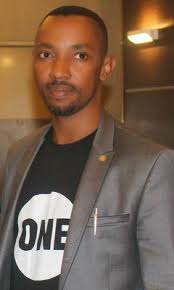
ONE Country representative, Nigeria, Mr. Edwin Dan Ikhuoria, penned an open letter to President Muhammadu Buhari, Nigeria's president, urging him to honor promises made during the adoption of the new Sustainable Development Goals (SGDs) in New York and invest more in the Nigerian health sector.
Read the letter below:

Dear President Buhari,

Honour the 2001 Abuja declaration and deliver a genuinely Pro-Poor 2016 Budget.

We thank you for prioritising the needs of the poorest Nigerians, and the fight against corruption in your recent proposals. Your leadership on both is timely as the start of your presidency (2015) was marked by the Country’s adoption of the new Sustainable Development Goals (SDGs). If followed through, these proposals and the new SDG commitments will create a new Nigeria, as they will unleash opportunities that will transform our country, our continent, and the world. We are writing because we want to help you realise these goals. We believe the starting point is through bold and targeted pro-poor public investments spelt out in your 2016 budget.

Specifically, we salute you for your stated commitment to spread basic health benefits to a majority of Nigerians because access to basic health care in the country is still the privilege of a few.

Mr. Edwin Ikhuoria


Secondly, we commend your commitment to ensure that Nigeria’s wealth is shared with the poorest
Nigerians and that they are given a lift through the planned social welfare program. Regarding the health focus, we are sure you are aware Mr. President that our great country, Nigeria, is amongst the
worst places in the world to be a child,infant or mother
. This is because one in eleven of all children who die in the world under the age 5 are Nigerian. Every year, 58,000 Nigerian infants receive HIV from their mothers during childbirth – a completely preventable tragedy for want of pills that cost a few Naira. No country in the world, not even in South Africa with its large HIV burden has more babies still acquiring HIV from their mothers. This is a glimpse of the situation we believe your administration has a historic opportunity to reverse, starting with the upcoming 2016 Budget, particularly by implementing the key provisions of the 2014 National Health Act (NHA). We urge you to ensure that the Basic Health Care Provision Fund provided in the NHA (which requires 1% of the consolidated revenue fund) is provided for as NEW funding to be invested in child vaccines, expansion and upgrade of health facilities, research and human capital development to address key communicable diseases.

Without these investments, the economy will continue to lose billions of Naira through Nigerians that travel abroad to access medical services, while the poor continue to die from treatable and
preventable diseases. A healthy population is truly the best insurance we can have for our economy to thrive. This was the main premise of the 2001 Africa Union “Abuja Declaration” where the leadership of the continent right here in Abuja, committed to prioritizing the development of the health sector by investing 15% of their national budget to the health sector. Rwanda, Swaziland, Ethiopia, Malawi, the Central African Republic and Togo have kept this promise. Countries such as Rwanda and Ethiopia are reaping great benefits, not only in the health of their population but also in sustained economic growth. Nigeria keeping this promise in the 2016 budget would translate in not less than N900 billion for Health, in view of the proposed N6 trillion budget. We implore you to move the Nigerian Government in Abuja boldly towards living up to its commitment in the “Abuja Declaration”.


Your Excellency, malnutrition in Nigeria remains a silent killer that must be stopped. It particularly affects mothers and children. It contributes to the deaths of about half a million children each year. In Nigeria, 36% of children younger than 5 years are stunted. Because it is a slow burner, its impact is not obvious but cumulative over generations. Nigeria as part of the African Union in 2014, pledged to work towards reducing this number to less than 10%. To ensure that Nigeria’s children have a fair shot at life, we also respectfully request nutrition specific investments in the 2016 health and agriculture budgets that address the stunting and wasting among Nigerian children, especially girls. The planned social welfare programmes must help achieve this objective. To ensure the potential multiplier and sustainable effects of the feeding programs, we recommend that they must be delivered through locally sourced nutritious produce which would directly boost markets for local agriculture. This approach will ensure that this expenditure is not merely consumption but spurs long term production and employment especially of Nigeria’s small holder farmers and young people. The success of the social welfare program pilots will need these elements and require inter-ministerial coordination managed by a senior political champion.
 

President Buhari

When the world meets in Rio De Janeiro in 2016 to take stock on actions and progress in the fight against high level of malnutrition, a successful implementation of this type of social welfare program, will demonstrate Nigeria’s leadership on this pressing matter. Mental health is another area where there is an overwhelming impact on the poor, yet fewer than 10% of sufferers receiving any treatment at all. All these urgent priorities across health, agriculture, school feeding and social safety payments must target to lift up the poorest, and be administered through accountable national and local budgets that are transparently implemented. This will help targeted beneficiaries to monitor and provide automatic feedback to improve program delivery and limit pilferage. We therefore call upon you to fully open the budget making, approval, implementation and evaluation process to the common Nigerian. Let Nigerians help you in holding your government to account on the promises that you made, and the reason that they serve. Within our current resource levels, high levels of citizen’s engagement will triple the impact of the budget. We believe your bold leadership on these issues will catalyze and guarantee economic expansion and sustainable inclusive growth that ensures that Nigeria leads the world on SDG progress starting in 2016.

Your Excellency, you have shown the political will to move our country forward in the pursuit of social justice, economic diversification and transparency for the benefit of each and every Nigerian. The eyes of the world are on Nigeria’s 2016 budget. We urge you to make fighting preventable diseases and malnutrition a hallmark of your legacy. A healthier Nigerian population would help our great nation leap-frog economically and socially by 2030.

Signed by: ONE campaign and 24 other well-meaning NGOs.