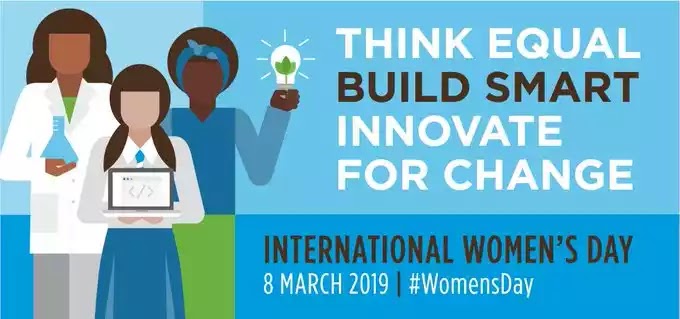
The role of women in peacebuilding is vital and indispensable. Peacebuilding is the foundation for creating sustainable development and human security in countries emerging from conflict. Michelle Bachelet, Head of the United Nations Entity for Gender Equality and the Empowerment of women (UN Women) states that “Wherever there is conflict, women must be part of the solution.”
The role of the 21st century woman is not to be relegated to the kitchen or to the background as our African forefathers made us believe. Women have the right to be frontrunners in decision-making, conflict prevention and peacebuilding. 21st Century women notably Ellen John-Sirleaf, Angela Merkel and Hillary Rodham Clinton have proven beyond reasonable doubt that women too can play an active role in making decisions that will bring peace and development. These women leaders have successfully broken ceilings that hitherto constituted barriers to women.
 |
| Hillary Clinton |
Women’s political participation and representation globally is still below the required mark as women still face daunting challenges to be accepted into “a man’s world”. A report by UN Women emphasizes this by stating that women make up less than 10 percent of world leaders today. Globally less than one in five members of parliament is a woman and the 30 percent critical mass mark for women's representation in parliament has been reached or exceeded in only 28 countries.
In October 2000, world leaders converged to adopt the UN Security Council Resolution 1325 which acknowledged that civilians, particularly women and children account for the vast majority of those adversely afflicted by armed conflict. The Resolution, therefore, recommended including gender perspective into peacekeeping operations but unfortunately, till date not much progress has been made.
At the 2005 World Summit, world leaders reiterated that women play an important role in conflict prevention, resolution and peace-building. They called for the effective implementation of Resolution 1325 (2000) on Women and Peace and Security. However, women are still being excluded from peacemaking and peace-building processes even though they are the most affected when there is a crisis.
 |
| Funmilayo Ransome-Kuti |
It is important to note that peace, development, security and human rights are intricately linked; one cannot function without the other. In times of crisis, women are saddled with worries not only about their survival but the survival of their loved ones. Many women are forced to become breadwinners and head of households with the responsibility of caring for themselves and their children because their husbands or partners are no longer available to perform this role.
Women and girls are always at the receiving end when there is conflict or a crisis. They face unimaginable trauma because they are most times subject of sexual abuse, exploitation and violation of their rights. They face an uncertain future, hunger, malnutrition and lack of protection. They are violated by the same people who should be protecting them. Worse still, the judicial system fails them and they cannot get recourse for crimes committed against them. This has led to more women fleeing their countries in search of a better life for themselves and their children. The consequence of this is a worsening and deepening global refugee crisis or an increase in the number of internally displaced people as in the case of women fleeing Boko Haram attacks in Nigeria. Presently, more than 4 million Syrian women and girls are in need of humanitarian assistance.
 |
| Mrs. Margaret Ekpo |
Although the UN Security Council Resolution 1325 was unanimously adopted to protect women and girls, they still suffer countless number of violations and abuse of their rights during and even after conflicts. Some examples are Nigeria, Syria, Northern Mali and Democratic Republic of Congo where women and girls have suffered rape, exploitation, human rights violations and untold hardship. These women live in perpetual fear for their lives and the lives of their children. They face shame, stigma and humiliation particularly when they get pregnant from rape or when they get infected with HIV. Presently in the Internally Displaced Persons (IDP) camps in Northern Nigeria, there is a high prevalence of HIV/AIDS. Efforts must be stepped up to arrest and prosecute the perpetrators of these heinous crimes so that justice will be served.
The inclusion of women in designing and implementing peace accords should be non-negotiable. It should be considered a priority and not just an afterthought. Involving women in peace negotiations will bring sustainable peace and development. Women’s participation in peacebuilding processes will also help tackle issues such as gender inequality.
Women peacebuilders bring different opinions, perspectives, priorities and strategies to the table of reconciliation, reconstruction and rehabilitation. The role of women in peacebuilding is recognized in many international agreements and resolutions. They all acknowledge that women are the main victims of conflict, and to address this situation, they should play a key role in drafting and implementing peace agreements and resolutions.
All over the world, women are proving that they are very competent in making decisions and taking charge. The 2011 Nobel Peace Prize ceremony was a moment of great joy and fulfillment for women globally as 3 great women namely Ellen Johnson Sirleaf, Tawakkol Karman and Leymah Gbowee were honored and awarded the Peace prize in recognition of their work as peacebuilders. This goes a long way to show that women are ready to play the role of peacebuilders.
In Nigeria, although women make up 49.4% of the more than 180 million population based on latest United Nations (UN) estimates, women remain under-represented in the political arena, marginalized in the society, and dominated in the private domain. Presently, of the 362 members in the Nigerian House of Representatives, only 24 (7%) are women, with just one female principal officer.
Even before Nigeria’s independence, several women shaped her history. These great women activists notably Funmilayo Anikulapo-Kuti, Margaret Ekpo and Queen Amina of Ancient Zaria fought for the respect of women’s rights and to give women a voice. Nigerian women have shown great strength and resilience when it comes to taking charge and making life-changing decisions. In the 21st century, women like Amina J. Mohammed, Ayo Obe and Obiageli Ezekwesili have used their voices and skills to bring peace to the country. Sadly, today, the majority of women in Nigeria still do not have a voice. If women are the most affected in times of conflict and crisis, why can't they be included in peacemaking and peacebuilding processes? Will they not be in a better position to contribute to decision-making being the principal casualties of war and other related conflicts?
Nigeria has witnessed all sorts of conflicts from South to North since her Independence: civil war, inter-tribal conflicts, religious clashes, insurgency by the dreaded Islamist militants, Boko Haram, and, women and children have always been the most afflicted. Unfortunately, women are still largely absent in positions of authority at both local and national levels. How then can they be involved in making decisions that will positively impact their lives and the lives of their children? Women have the capacity to bring about positive change in the society. They should be able to wield their influence not only in the private domain but also and most importantly on national issues particularly when these issues affect them and/or their families.
One of the major challenges women face in their role as peacebuilders is that they are often under-estimated, subjugated and perceived not to have the right skills, knowledge, capability or social status needed to participate in discussions that will prevent conflicts or bring about change in post-conflict societies. This mindset urgently needs to be changed as more women need to be integrated into peace-building processes. The role of women in the prevention as well as the resolution of conflicts should be viewed differently and should be given top priority. Women ought to be given more key roles as national and international mediators.
By being included in prevention and resolution strategies, women can play an active role towards making peace more sustainable. Women should be engaged at the very beginning of peace processes. It is, therefore, important to ensure that structures are put in place to encourage and support women participation in politics and decision-making. It is the responsibility of all stakeholders to ensure that women are well represented, their rights protected and gender expertise included in every effort to prevent and resolve conflicts.
When women have a voice and have the power to express their opinions in the public sphere, they are one step closer to participating in peace talks. Gender equality is inextricably linked to peace and development. Women all over the world particularly in Africa must be empowered economically and strengthened through training in order for them to use their ability to bring about peace, reconciliation and development. More women should be given the opportunity to engage in peace talks, conflict resolution and peacebuilding.
Women’s civil society organizations and other women’s networks can be major players in peace-building. They should be engaged as key partners of the international community in both national and regional action plans to implement Resolution 1325 (2000) on women and peace and security. These groups have an important role to play in peacebuilding as they have successfully demonstrated in some African countries like Rwanda, Liberia and Sierra Leone. They ought to be strengthened as well as provided with financial aid and support when needed.
Women face several barriers in their efforts to become peacebuilders and all these issues including gender discrimination and gender inequality must be addressed both at the national and international level. Consultation with local leaders and stakeholders including women’s civil society organizations will help develop effective and sustainable solutions to these barriers.
However, despite challenges, women continue to play a major role in the prevention and resolution of conflicts and in the building of peace at the community, national and international levels. Women have valuable perspectives on peacebuilding, as acknowledged in West Africa and Haiti.
The protection and security of women by the judiciary as well as their empowerment and education will go a long way in getting more women involved in peace-building processes. There must be an increase in both national and international efforts from all actors involved to ensure that women are given key roles to play in peace-building processes as their perspectives on peaceful resolution have proven to be invaluable and vital to achieving lasting peace.
There can be no prevention of conflicts without the participation of women, and no participation of women without adequate protection of the rights of women.
Investing in women to empower, educate and train them as well as advance their rights is not just the right thing to do, it is the smart thing to do as it will result in more women taking the lead and actively participating in peacebuilding. It is an investment that will benefit everyone.
Taking action to increase women's leadership roles and political participation, strengthen women's economic power, end violence against women and girls, and ensure that women play a major role in peacemaking and peacebuilding must be done urgently.
 |
| Ayo Obe |
Violence against women and girls is one of the worst violations of human rights and effective measures must be taken to protect women and girls at all times; in the private domain, pre and post elections as well as during and after conflicts.
Women should not only be encouraged to participate in drafting and implementing peace agendas but also given central roles to play as this will lead to building peaceful, sustainable societies. Women desire to be part of peace processes. They want to be a part of the solution. They want their voices to be heard and their opinions taken seriously. They wish to live in a peaceful, free and fair world.
Now is the time to make a major push for increased women's political leadership and participation.
Article written by Marvella Odili.